
BECA® Dealcoholization CA15 Aroma-Save
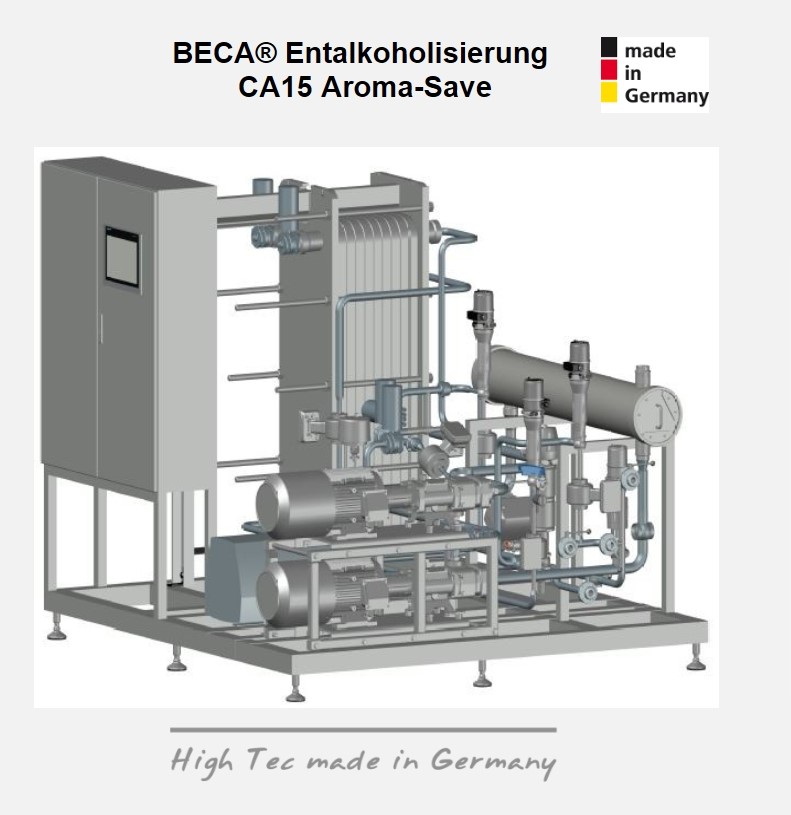
Cost-Effective - High Quality
With the fully automated, high-quality, and reliable CA15 Aroma-Save de-alcoholization process,BECA® offers the optimal method for reducing and removing alcohol without compromising flavor.
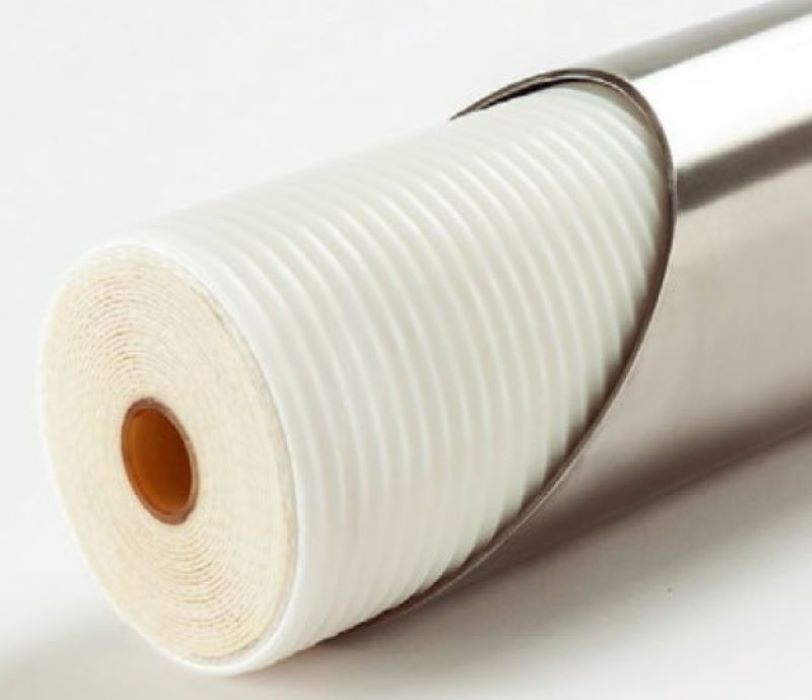
Compared to thermal de-alcoholization processes (such as vacuum rectification or thin-film evaporation), the use of membrane processes (such as reverse osmosis with polyamide TFC membranes) offers one crucial advantage: maximum protection of product quality by eliminating the use of heat.
| Criterion | Membrane Process (BECA® De-alcoholization) | Thermal processes (e.g., vacuum distillation) |
|---|---|---|
| Process temperature | Low (approx. 8–18 °C) | Elevated (approx. 32–50 °C in a vacuum) |
| Loss of flavor | At least, since molecules are physically retained | High-, since volatile aromas evaporate along with the alcohol |
| Aroma Recovery | Not strictly necessary | Technically necessary (often incomplete) |
| Mouthfeel & Foam | Remain intact | May be affected by protein denaturation |
| Potential Alcohol Content | Typically up to < 0.5% vol. (lower even with a larger surface area) | Can be set to nearly 0.0% (< 0.05% vol. / "0.0") |
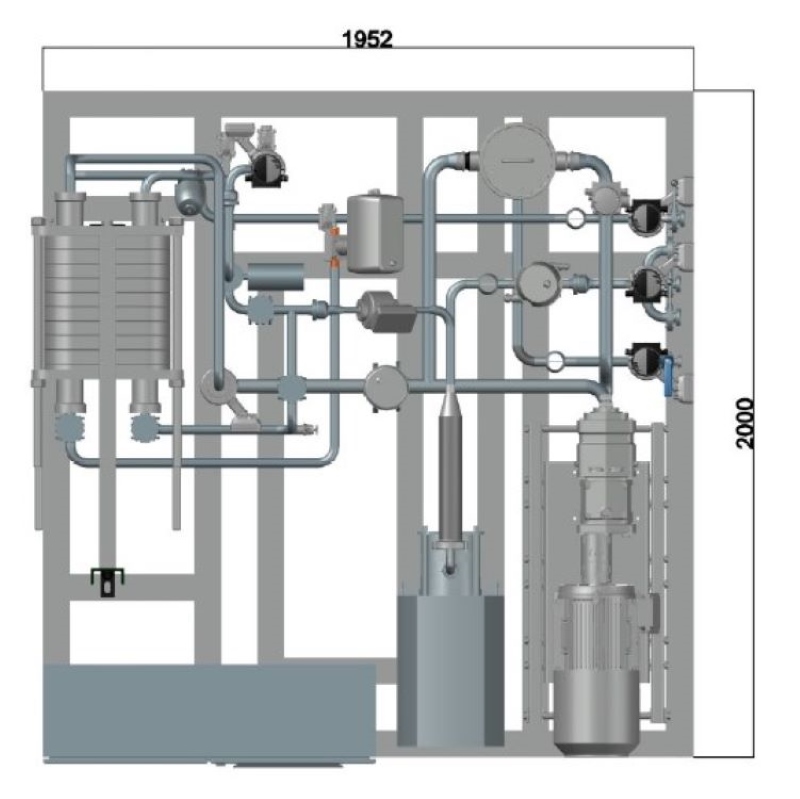
Flexible - Multi-process plant - Process integration
The BECA® dealcoholization CA15 combines several processes in a high-quality design, each of which can be operated individually or in combination. This results in significant savings in investment costs for individual systems.
- Dealcoholization plant for beverages
- Blending device for beverages
- Cooling of drinks
- Carbonation of beverages
- optional extension with degassing of beverage water
- optionally integrated CIP station
Superior technology:
-
Precise control and sharpness of separation
- Molecular Size Separation vs. Boiling Points: Thermal processes separate strictly based on boiling points. Since many important flavor compounds have a boiling point similar to that of ethanol, they inevitably evaporate along with it and often must be recycled using flavor recovery systems—a process that is labor-intensive and results in a loss of quality.
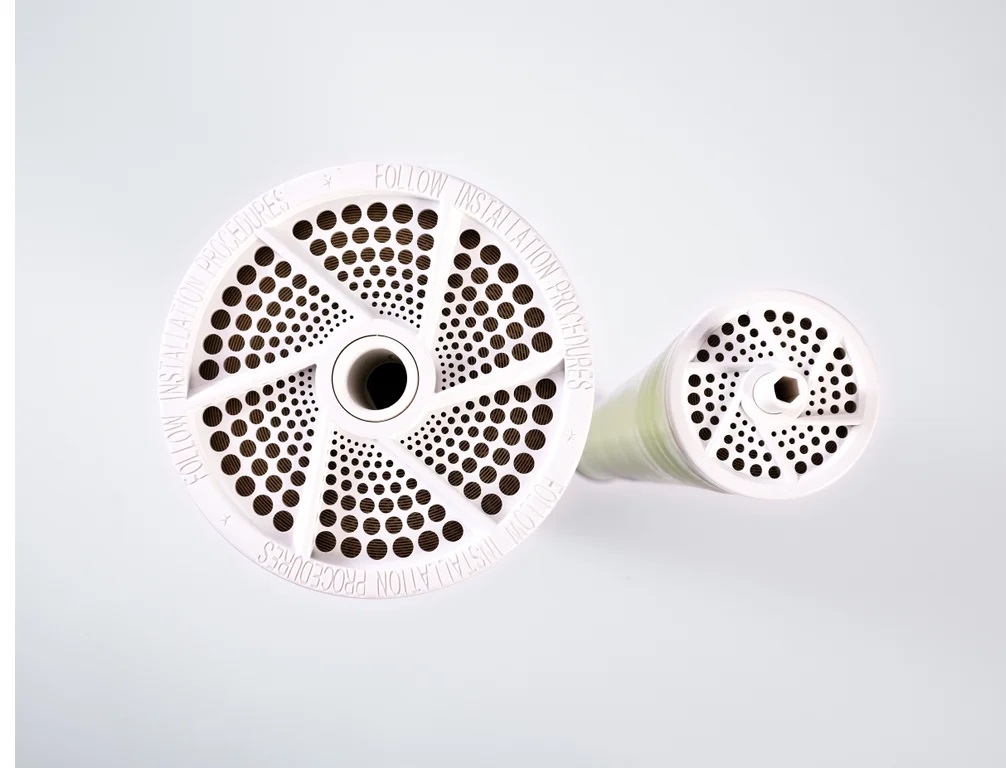
- High-Efficiency Retention: A modern polyamide membrane retains molecules based on their size and charge. Aromatic compounds and color components are significantly larger than ethanol and water at the molecular level and remain almost 100% in the retentate (beverage), without the need for thermal recovery.
-
Preserving the texture and "mouthfeel"
- Preservation of colloids and macromolecules: In beer and wine, proteins, beta-glucans, and polyphenols play a crucial role in body and head stability (in beer). Thermal processes can denature these proteins, leading to cloudiness or a “watery” mouthfeel. Membrane filtration completely preserves these texture-giving components.
-
Greater flexibility for smaller production runs
- Compact systems: While thermal rectification columns are often very tall and designed for continuous, high-volume operation, membrane systems can be scaled in a highly modular and flexible manner (e.g., even in batch processes for smaller breweries or wineries).
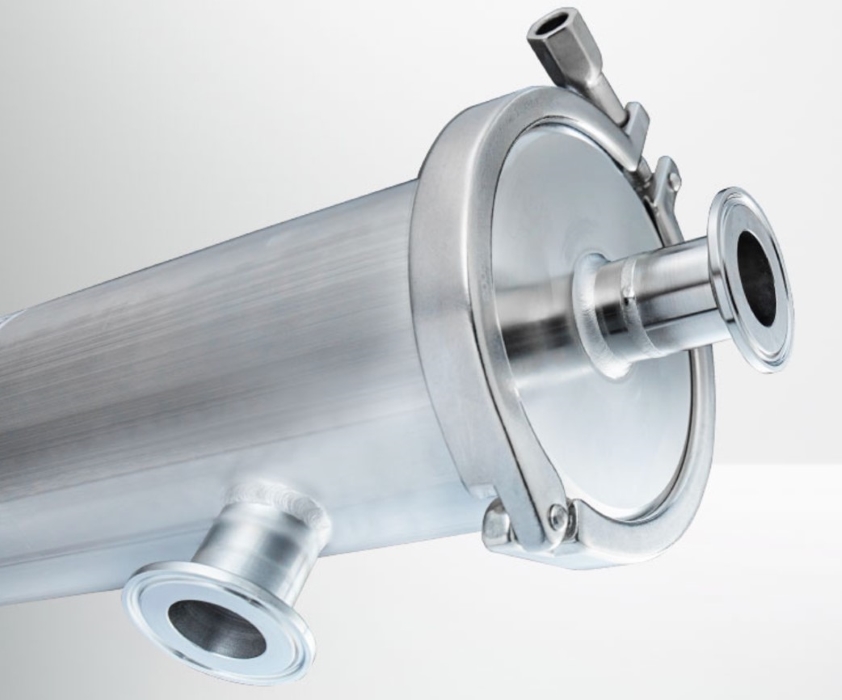
Your Benefits of the BECA® CA15 Aroma-Save De-Alcoholization
Purity in Composition:
- Hygienic design with biologically pure surfaces
- Dead-Space-Free Inline CIP Cleaning and Sterilization
- Extremely simple, menu-driven operation with recipe storage
- Fully Automated Processes with Accounting
- Customization of the system design to meet customer needs
- Maximum cost-effectiveness, control accuracy, and reproducibility
Data:
- Our team will analyze your needs and provide you with the best solution.
- Modular design and easy expansion of capacity and filtration area
- Optional test systems allow you to perform quality checks, determine yield, and calculate flux rates specifically for your product and operating conditions.