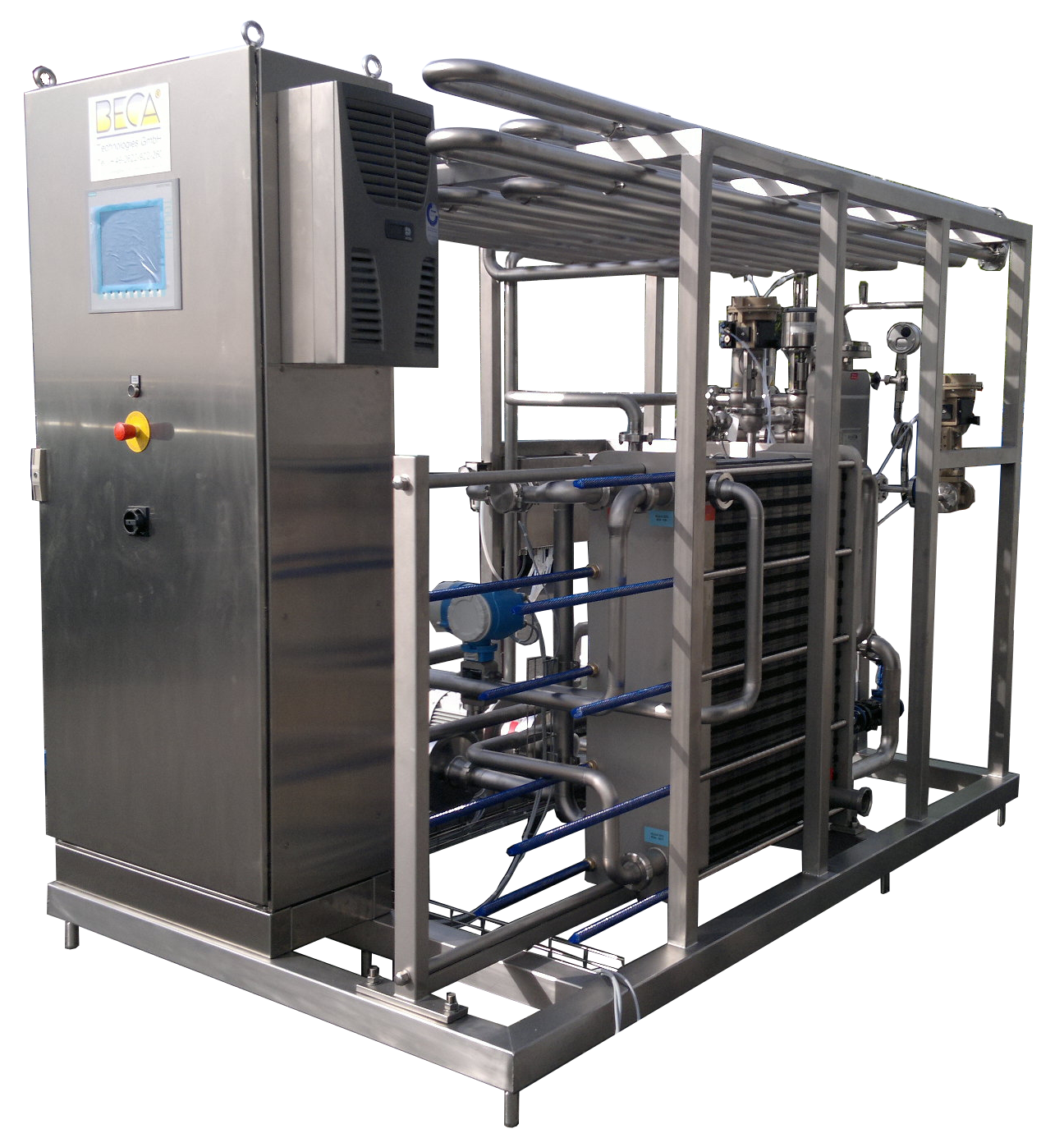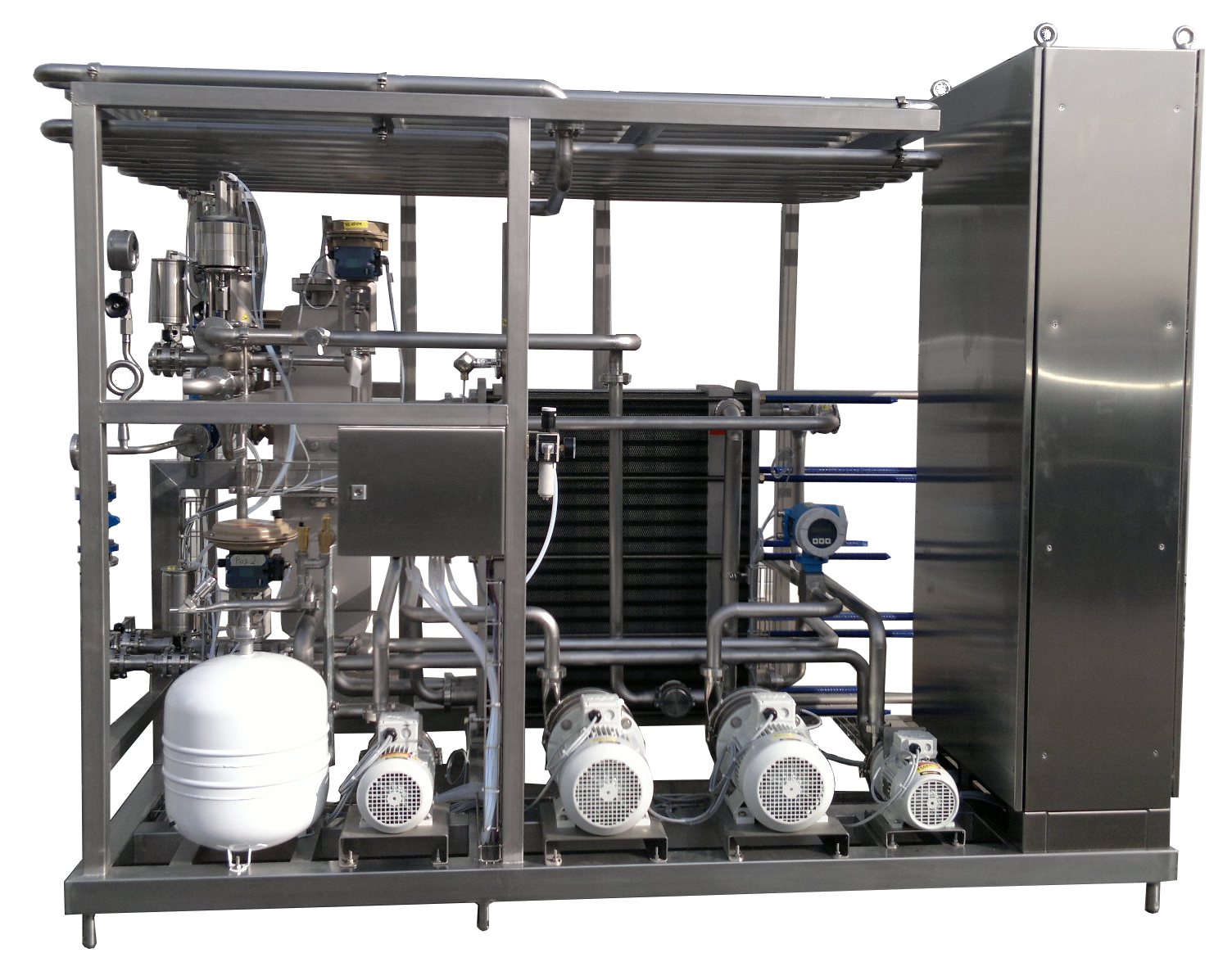
BECA® Short-Time Heat Treatment (Pasteurization) System

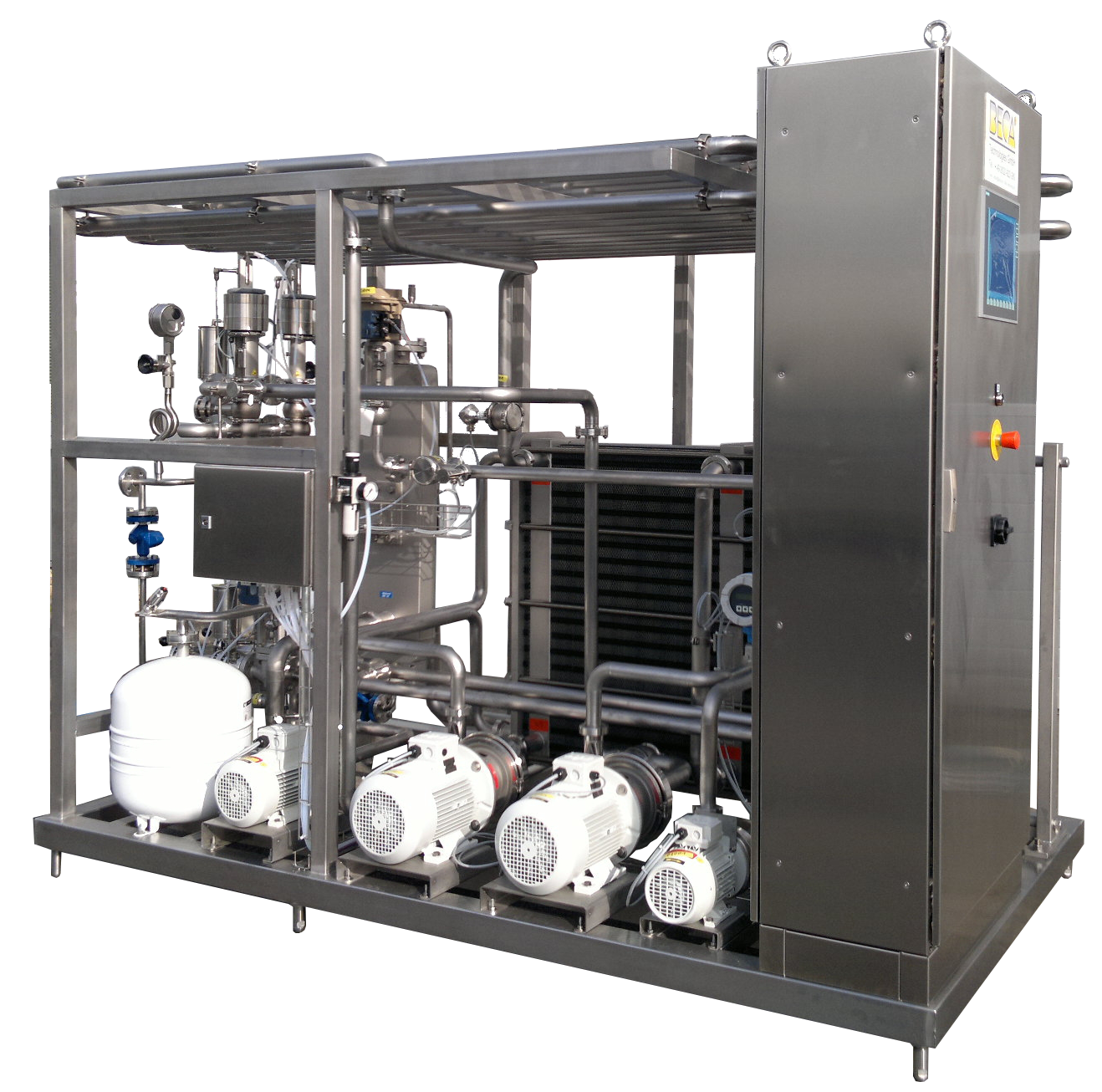
Purity & Resource Conservation
You and your customers have high expectations for the quality of your products, particularly with regard to shelf life and product stability. The BECA® short-time heating process is designed for the gentle, safe, and flexible pasteurization of your products and is the reliable method for eliminating primary infections.
1. Key Parameters of Process Control The design is based on the target product and the indicator microorganisms present in it.
• Temperature-time combination: For example, according to EU law (Regulation (EC) No. 853/2004), milk must be heated to at least 72 °C for 15 seconds (or an equivalent effect). In practice, temperatures of 72 °C to 75 °C for 15 to 30 seconds are typically selected.
• Flow profile (Reynolds number): A turbulent flow (Re > 4,000) must prevail in the holding zone. This ensures that the fastest liquid particle at the center of the pipe does not fall below the required minimum residence time.
• Residence time distribution: The heat retention tank is designed based on the average flow velocity. A safety factor (the ratio of maximum to average velocity, approximately 0.8 for turbulent flow) is factored in to prevent under-pasteurization.
2. Hygienic Design and Safety Technology Since the process runs continuously, automated safety mechanisms are essential.
• Switching valve (flow monitor): If the temperature at the end of the heat holder drops below the setpoint, an automatic switching valve immediately redirects the product back to the feed tank (circulation mode) until the setpoint temperature is stable again.
• Fouling minimization (deposit formation): High temperature differences (ΔT) between the heating medium (hot water/steam) and the product lead to protein and mineral deposits on the plates. An optimal design limits ΔT in the heating zone to approximately 2 K to 4 K to enable long operating times before the next CIP (Cleaning-in-Place) cycle.
• Elimination of dead spaces: All piping, sensors, and valves must be designed for efficient flow and without dead spaces to prevent the formation of bacterial colonies.
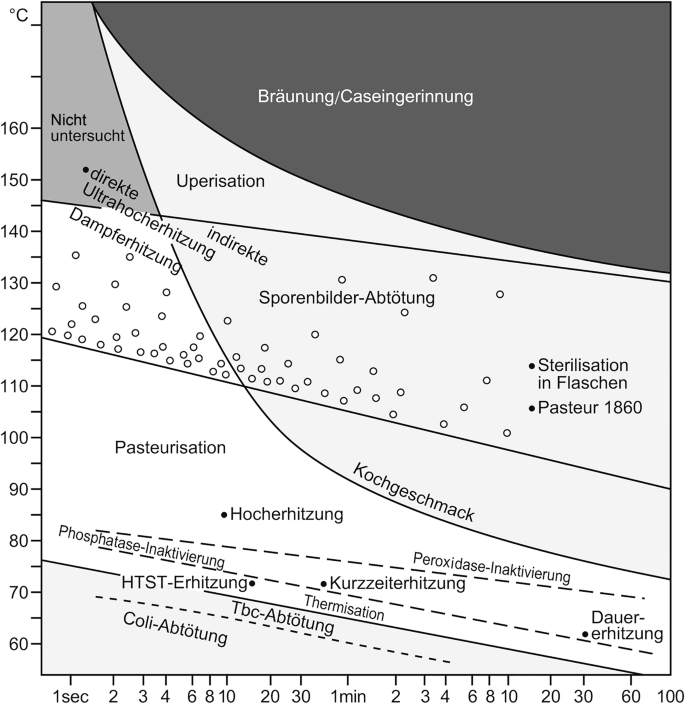
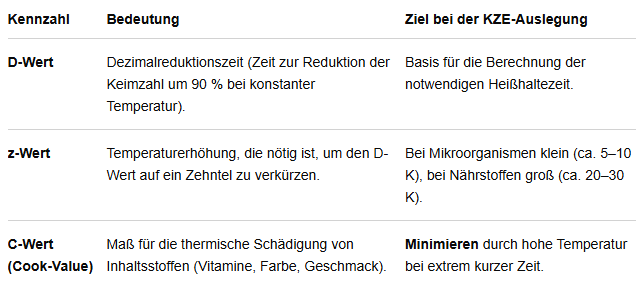
3. Kinetic Optimization (D, z, and C values) To balance quality and safety through computational analysis, BECA uses reaction kinetics
- z-value: The z-value indicates by how many degrees Celsius the temperature must be increased to increase the reaction rate by a factor of 10.
- Microorganisms and enzymes: They have low z-values (typically 5 to 10 °C). A 10 °C increase in temperature accelerates their death by a factor of ten.
- Nutrients and Sensory Properties: Vitamins, proteins (denaturation), and flavor compounds have high z-values (typically 20 to 40 °C). They react much more slowly to higher temperatures.
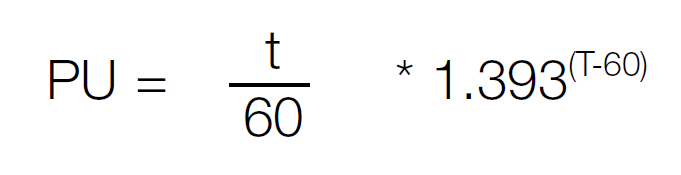
- P-value / F-value (pasteurization/sterilization value): Defines the thermal load required to reliably kill the target microorganism (e.g., Coxiella burnetii, in milk). This value must be achieved.
- C-value (Cook-Value): Describes the extent of chemical changes (e.g., loss of vitamin B1 or browning). The goal of kinetic optimization is to minimize the C-value while keeping the P-value constant.
The benefits of the BECA®short-time heating pasteurization system at a glance:
-
High-quality, dead-space-free design in accordance with EHEDG guidelines; optional aseptic design; integrated CIP routine
-
Closed sterile chain, gentle product handling
-
Automatic Pressure Gradient Protection: Monitoring of the Positive Pressure Gradient
-
High Reproducibility / Control Accuracy
-
An optimized control process for largely offsetting fluctuations in demand
-
Optimized PE Control: BECA-FlashControl
-
Conductance- and volume-controlled ejection routine, optional backflush routine
-
High energy efficiency thanks to optional heat recovery of up to 96% and the option to eliminate recooling sections
-
Extremely simple, menu-driven operation with recipe storage, PLC, or control room integration. Remote maintenance module included
-
Optional expandability and compact modular design. Custom configurations available upon request.